Grindr - Gay Dating & Chat
- 4.2
- Rating
- 50.00M
- Installs
- Free
- Price

 Analysis by App-foxy
I found Grindr most useful when I treated it as a quick, location-aware way to meet people rather than as a promise of a complete dating experience. It is a social app for gay, bi, trans, and queer people, developed by Grindr LLC, and its main advantage is simple: it can make nearby conversations easier to start than they would be through broad, general-purpose dating services. That convenience is also the source of its biggest weakness, because the experience can feel fast, appearance-led, and inconsistent from one area to another.
After spending time with it, my view is fairly clear. Grindr works best when you want to see who is around, begin a direct conversation, and decide for yourself whether there is genuine compatibility. It is less suitable if you want a slow, highly structured dating process, detailed compatibility matching, or a calmer social environment with fewer interruptions.
How the nearby grid shapes the experience
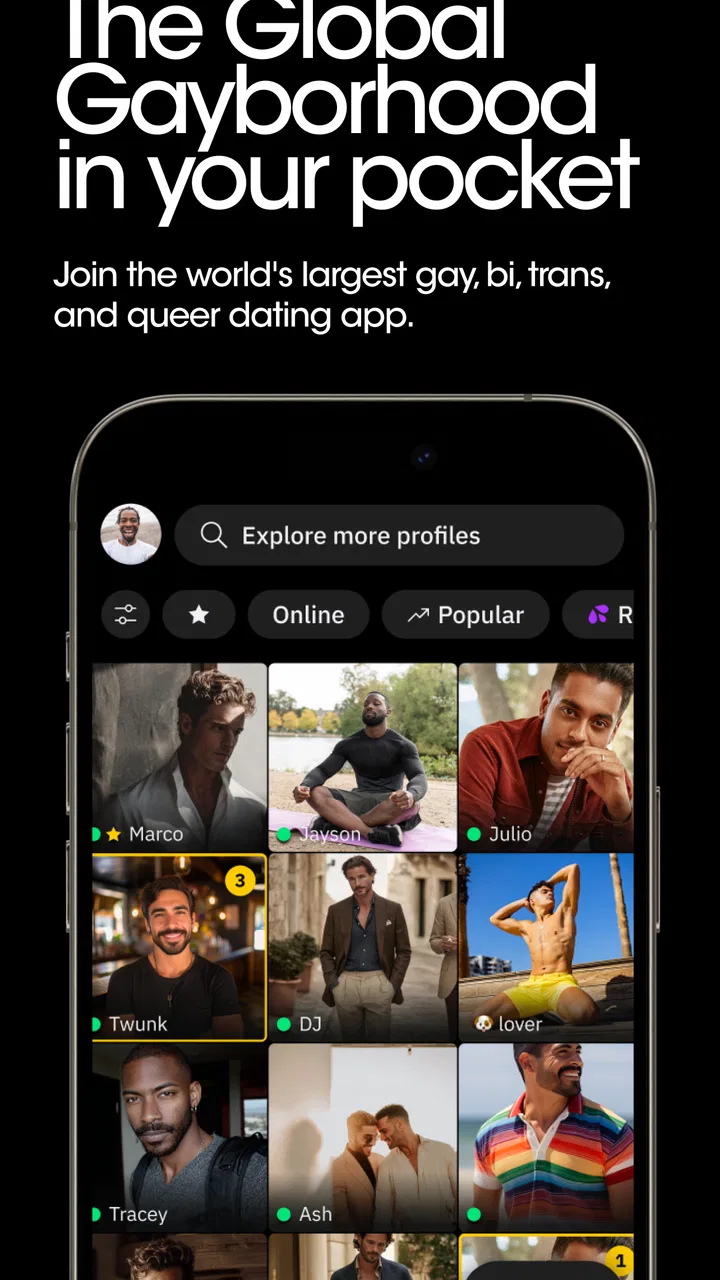
The app’s identity comes from its proximity-focused layout. Instead of asking me to build a long profile before seeing anyone, it puts nearby profiles at the center of the experience. That makes the first session feel immediate. I can scan photos, names, short descriptions, and whatever personal details people choose to share, then decide whether to open a conversation.
You May Also Like

 AccuWeather: Weather Radar
AccuWeather Review: A Quick, Clear Forecast for Everyday Decisions
For everyday plans, the best forecast is the one you can understand quickly. AccuWeather makes rain timing, radar, and local conditions easy to act on, with a few trade-offs.

 Hill Climb Racing
Why Hill Climb Racing Still Turns Crashes Into One More Run
A tiny car, a bumpy hill and one more upgrade: Hill Climb Racing keeps resurfacing because its simple chaos makes every near-miss feel personal.

 AliExpress - Shopping App
AliExpress Makes Global Shopping Feel Personal, but Shoppers Bear the Risk
AliExpress turns a global marketplace into a pocket-sized discovery engine. Its reach is useful, its shopping loop compelling, and its trade-offs easy to miss.

 Lords Mobile: Kingdom Wars
Lords Mobile Is a Kingdom-Building Routine, Not a Quick Match
A case-by-case verdict on the building, battles, device demands, and social commitments that make Lords Mobile rewarding for some players and exhausting for others.

 PDF Scanner app - TapScanner
TapScanner Makes Paperwork Easier to Capture, Check, and Share
TapScanner makes scanning with a phone feel less like a rescue operation and more like a dependable step in getting work done. Its capture tools are useful, though not flawless.

 Block Blast!
 Shows How Much a Puzzle Game Can Leave Out
A quiet grid game shows why puzzle players increasingly value instant clarity, repeatable skill and low-pressure play—and where the genre still needs to catch up.
More From Our News Desk
View All News


This is a meaningful difference from larger dating apps that often emphasize swiping through a broad queue. With Grindr, the question is less “who does the system think I might like?” and more “who is active or visible around me right now?” That can be especially helpful in a new neighborhood, while traveling, or in places where a queer person may not know how to find an accepting social circle.
The grid is efficient, but it also encourages quick judgments. A profile can be dismissed in seconds, and a short message may be sent before either person has enough context to understand the other. I recommend slowing down deliberately: read the profile text, notice whether the person has stated what they want, and ask a normal question instead of opening with a vague greeting. That small change makes the app feel less like a stream of faces and more like a tool for starting real conversations.
Distance can be useful without being a complete guide. Someone nearby may be unavailable, looking for something different, or simply not a good conversational match. I would avoid assuming that proximity equals interest. The strongest use of the grid is as a discovery tool, not as a shortcut around basic communication.
What I look for before starting a chat
I pay attention to whether a profile gives me a clear sense of the person’s tone and expectations. Even a few thoughtful lines can be more helpful than several generic labels. When a profile is almost empty, I treat it as a reason to ask a low-pressure question rather than as evidence of anything negative.
Another practical habit is separating browsing from arranging a meeting. The app makes it easy to move quickly from seeing a profile to discussing plans, but I prefer to exchange enough messages to confirm that the conversation feels respectful and consistent. I also tell a friend where I am going, choose a public place for an initial meeting, and keep control of my own transport. Those precautions are sensible for any dating app, but the fast pace here makes them particularly important.
For people who are private about their identity, the location-based design deserves careful thought. The app can help someone find community, but opening conversations with strangers also requires judgment about what to reveal and when. I would avoid sharing an exact home address, workplace details, financial information, or intimate images before trust has been earned. A profile can be friendly and still not provide enough reason to disclose personal information.
Messaging is direct, but the quality depends on user habits
The chat experience feels built around immediacy. That is useful when both people are online and have a clear reason to talk. It is less satisfying when conversations become a series of one-word replies, disappear without explanation, or turn sexual before any comfort has been established. The app cannot solve that social problem for me; it can only make contact easier.
I got better results by being specific. Instead of sending a message that could apply to anyone, I referred to something in the profile or asked about a shared interest. I also stated my own intention early when it mattered, whether I was interested in conversation, dating, friendship, or something casual. Directness reduces wasted time, although it does not guarantee politeness from every user.
That is where Grindr differs from some mainstream alternatives. Apps such as Tinder, Bumble, or Hinge may guide users through a more familiar match-first routine, while Grindr places more responsibility on the individual to filter conversations and set boundaries. Hinge can feel better for someone who wants prompts and more profile context. Bumble may appeal to someone who prefers a more defined opening-message structure. Grindr is the stronger choice when local queer discovery and speed matter more than a carefully staged matching process.
Those comparisons are not about one app being universally better. They reflect different priorities. A person who wants to browse nearby queer profiles without waiting for a mutual swipe may find Grindr refreshingly direct. Someone who finds visual browsing tiring or wants a slower path toward commitment may feel more comfortable elsewhere.
Where the free version fits
Grindr is free to download and use, which makes it easy to try without committing money first. The app also offers in-app purchases, with individual items ranging from $0.99 to $769.99. That broad range means I would look carefully at the exact purchase screen before confirming anything, especially if an option is presented as a recurring upgrade or bundled benefit.
My advice is to begin with the free experience and identify the specific problem you are trying to solve. If browsing nearby profiles and chatting is already enough, paying may not improve the part of the app you actually enjoy. If you are considering an upgrade, ask whether it will reduce a particular frustration, such as limited discovery or a need for more control, rather than buying simply because the paid tier appears more complete.
Subscriptions and add-ons can make sense for frequent users, but they are not a substitute for better conversations. No purchase can make an incompatible person compatible, and no premium option removes the need to protect your privacy. I would also review the purchase terms through the relevant app store and keep track of any renewal settings. That is ordinary advice, but the high end of the listed purchase range makes it worth being especially attentive.
Privacy, boundaries, and the emotional cost of speed
The mature rating of 17+ is an important signal about the intended audience and the kinds of conversations users may encounter. I would not recommend treating the app as a casual space for younger teens, and parents or guardians should understand that its purpose is adult-oriented social and dating interaction.
For adults, the main challenge is not simply avoiding unsafe behavior. It is managing the emotional effect of a busy, appearance-focused environment. Being ignored, unmatched, or rejected can happen quickly, sometimes without explanation. I found it healthier to use the app in short sessions rather than constantly checking for new attention. Turning a browsing session into a timed activity can prevent the grid from taking over an evening.
Boundaries also need to be practical. I would leave a conversation when someone pressures me for personal details, refuses to respect a clear limit, or becomes hostile after I say no. Blocking or reporting is more useful than trying to win an argument. I would preserve relevant details if a serious issue occurs, but I would not continue engaging just to prove a point.
There is a difference between being direct and being careless. The app’s speed rewards concise communication, but concise does not have to mean rude. A short message that says what I am looking for is more useful than sending personal questions immediately. The same standard applies in reverse: users should be free to decline without having to justify themselves.
Useful situations beyond ordinary dating
One of the app’s strongest use cases is arriving somewhere unfamiliar. Imagine spending a weekend in a new city and wanting to know whether there is a queer social scene nearby without asking strangers in person. Grindr can provide a starting point for conversations, local recommendations, or a low-pressure coffee meeting. I would still verify plans carefully and avoid assuming that a profile represents an entire community.
It can also help someone who feels isolated in a place with a small visible queer population. Even when a romantic connection does not develop, finding someone who understands a shared experience can matter. The limitation is that the app’s dating and hookup reputation may make friendship harder to communicate. If friendship is the real goal, I would say so clearly and accept that some people will be looking for something else.
Another useful workflow is using the app to clarify what I do not want. After a few conversations, patterns become easier to recognize: whether I prefer detailed profiles, slower replies, direct intentions, or a particular kind of social energy. That self-knowledge can help me use Grindr more selectively and can also show me when another platform would be a better fit.
For someone exploring identity, the app may offer contact with people who understand queer life, but I would not treat it as a replacement for trusted friends, professional support, or moderated community resources. Dating conversations can be helpful, yet they are not always emotionally safe or educational. The app is best viewed as one possible doorway into connection, not the whole support system.
Performance, availability, and who should skip it
The current version is 26.15.0, and it supports devices running Android 8.0 or later. That makes the technical barrier fairly manageable for many Android users, though anyone with an older phone should check compatibility before planning around it. On iOS, the same general experience is available through the Apple ecosystem, but the practical details of purchases and account settings can differ by platform.
The app has been available since February 25, 2011, and its longevity is visible in how recognizable the service has become within queer dating culture. Its scale is also substantial: it has passed 50 million installs and holds a 4.2 average from around 1.6 million ratings, alongside roughly 79 thousand written reviews. Those figures suggest a large, active audience, but they should not be mistaken for a guarantee that my local area will have the right people or the kind of activity I want.
I would skip Grindr if I dislike location-centered discovery, feel uncomfortable with a fast visual first impression, or want a dating app that strongly encourages detailed profiles and deliberate matching. I would also look elsewhere if I am seeking a primarily platonic community, because the expectations of people I meet may not align with that goal.
It is not the right choice for anyone who is not comfortable setting firm boundaries with strangers online. Nor would I recommend it as the sole option for someone dealing with intense loneliness or looking for professional emotional support. In those situations, a moderated community group, a general social network with clearer interest-based spaces, or qualified support may be more appropriate.
My verdict after using it
Grindr is a strong specialist app, not an all-purpose answer to dating. Its nearby grid makes queer discovery immediate, and that can be genuinely valuable when mainstream services feel too broad or when I want to understand who is around me. The free entry point lowers the risk of trying it, while the established user base gives it a better chance of producing relevant conversations than a small niche service.
At the same time, the app asks me to do more of the filtering myself. I need to judge intentions, manage privacy, handle abrupt conversations, and resist the temptation to measure my worth by replies or profile attention. The fast format is convenient, but it can also make interactions feel disposable.
I would recommend it to an adult queer user who values local discovery, direct messaging, and the possibility of meeting people without waiting for a carefully engineered match. I would suggest starting slowly, writing clear profile expectations, avoiding oversharing, and testing the free experience before considering any purchase. If those habits sound reasonable, Grindr can be a practical way to open doors that are otherwise difficult to find. If they sound exhausting, a slower, profile-rich alternative will probably be a better companion.
FAQs for Grindr - Gay Dating & Chat
01What is Grindr, and who is it designed for?
Grindr is a location-based dating and social networking app primarily designed for gay, bisexual, transgender, queer, and questioning adults. It helps users discover nearby profiles, exchange messages, share photos, and arrange conversations or dates. The app is intended for people aged 18 and over, and the available profiles, features, and community experience can vary depending on your location.
02Is Grindr free to download and use?
Grindr can be downloaded for free, and the free version provides access to basic profile browsing, messaging, and discovery tools. However, the app also offers optional paid subscriptions and in-app purchases that may increase the number of profiles you can view, provide additional filters, remove certain limits, and offer other convenience features. Review the current pricing carefully before subscribing, as plans and benefits may change.
03Does Grindr show my exact location to other users?
Grindr uses location information to display nearby profiles, but it generally does not show your precise address directly on your profile. Even so, distance-based features can reveal approximate proximity, and sharing photos, social accounts, workplace details, or meeting locations may expose more personal information than intended. For greater privacy, adjust location permissions, avoid identifying details, and communicate cautiously.
04Is Grindr safe for chatting and meeting people?
Grindr includes tools such as blocking and reporting to help users manage unwanted contact, but no dating platform can guarantee that every interaction will be safe. Avoid sending money, passwords, intimate content that could identify you, or personal documents. Before meeting someone, consider a video call, tell a trusted person where you are going, choose a public location, and leave if anything feels uncomfortable.
05What should I know about privacy, profiles, and account management?
Before creating an account, remember that your profile information, messages, photos, and approximate location may be processed according to Grindr’s privacy policies and your device permissions. Use a strong, unique password and review visibility and notification settings. If you stop using the service, deleting the app may not delete your account, so use the in-app account deletion option and check subscription settings separately.
Pros
- Large LGBTQ+ user base in many cities and countries.
- Location-based matching helps find nearby people quickly.
- Profile filters make it easier to narrow down preferences.
- Chat supports photos
- voice messages
- and video calls.
- Safety tools allow users to block and report unwanted contacts.
Cons
- Free accounts face limits on profiles
- filters
- and daily interactions.
- Location features may raise privacy concerns if used carelessly.
- Some profiles may be inactive
- misleading
- or incomplete.
- Advertising and upgrade prompts can feel intrusive.
- The app may encourage appearance-focused and fast-paced interactions.

Grindr - Gay Dating & Chat
Gallery